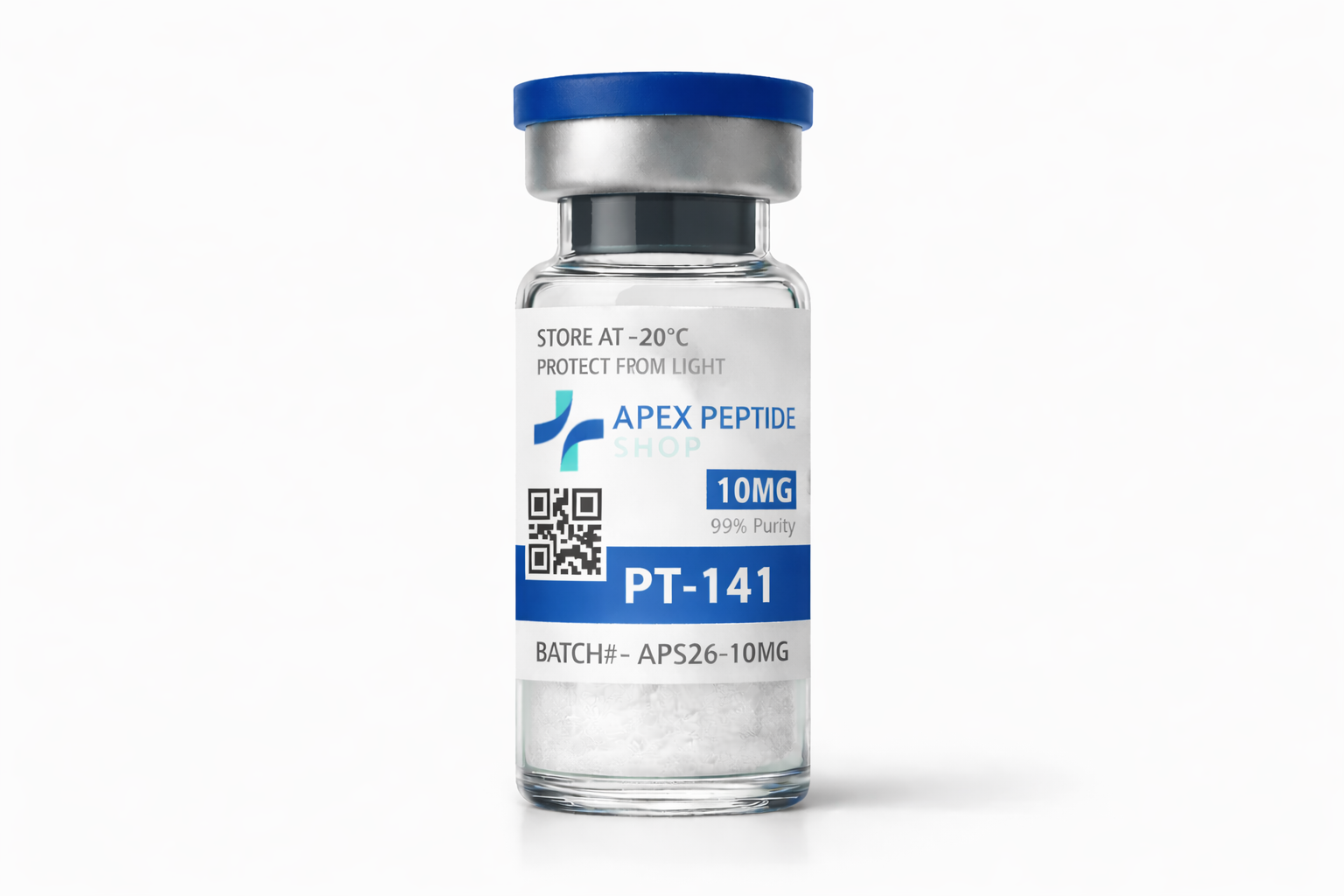
PT-141 Peptide (also known as Bremelanotide ) is a synthetic
research peptide derived from α-Melanocyte Stimulating Hormone ( α-MSH ).
In laboratory research, PT-141 Peptide is used to study the role of melanocortin receptors
, specifically the MC3R and MC4R receptors, which are involved in
neurotransmission, energy metabolism, and signaling mechanisms in vitro. This peptide is manufactured according to strict quality standards and verified via
High-Performance Liquid Chromatography (HPLC) to ensure a purity of ≥ 99%.
Each batch is suitable for controlled biochemical and neurophysiological research environments.
€60.00
Safe and discreet delivery
Pharmaceutical-grade research peptides
24/7 Support
Unlimited help desk
2-day Delivery
Track or off orders
Description
PT-141 Peptide (Bremelanotide) – Melanocortin Receptor Research Peptide
PT-141 (Bremelanotide) is a synthetic melanocortin receptor agonist widely studied in neurobiology, receptor signaling, and melanocortin pathway research. Unlike peptides that act on vascular pathways, PT-141 is primarily investigated for its interaction with the melanocortin receptor system (MC receptors) in laboratory models.
Due to its receptor selectivity and central signaling activity, PT-141 peptide is commonly referenced in scientific literature exploring neurotransmitter signaling, behavioral biology, and peptide–receptor interactions.
What Is PT-141 Peptide?
PT-141 is a synthetic analog derived from melanocortin-based peptides. In research environments, it is used to study melanocortin receptor activation, central nervous system signaling, and neuroendocrine pathways. Its structure allows researchers to evaluate receptor binding affinity and downstream cellular signaling responses.
Key Research Observations
-
Studied for melanocortin receptor (MC3R & MC4R) signaling
-
Referenced in neuroendocrine and CNS pathway research
-
Used in laboratory models exploring behavioral biology mechanisms
-
Valuable for peptide–receptor binding and structure–activity analysis
Laboratory Applications
PT-141 peptide is primarily utilized in:
-
Melanocortin receptor signaling studies
-
Neurobiology and central nervous system research
-
Peptide structure–function investigations
-
Experimental receptor-binding assays
Experimental concentrations are determined according to laboratory protocols and vary depending on model system and assay design.
Product Highlights
-
High-purity PT-141 (Bremelanotide) peptide
-
Research-grade quality
-
No fillers, additives, or excipients
-
Manufactured to strict laboratory standards
PT-141 peptide (also known as Bremelanotide ) is a synthetic
research peptide derived from α-Melanocyte Stimulating Hormone ( α-MSH ).
In laboratory research, PT-141 is used to study the role of melanocortin receptors
, specifically the MC3R and MC4R receptors, which are involved in
neurotransmission, energy metabolism, and signaling mechanisms in vitro. This peptide is manufactured according to strict quality standards and verified via
High-Performance Liquid Chromatography (HPLC) to ensure a purity of ≥ 99%.
Each batch is suitable for controlled biochemical and neurophysiological research environments.
Important specifications
| Feature | Value / explanation |
|---|---|
| Name | PT-141 Peptide (Bremelanotide) |
| Molecular formula | C50H68N14O10 |
| Molecular weight | ≈ 1025.2 Da |
| Form | Lyophilisate (dry powder) |
| Purity | ≥ 99 % (HPLC tested) |
| Storage conditions | Store refrigerated, protected from light and moisture. |
Application & Use (for research purposes only)
- For in vitro research purposes only .
- Not suitable for human or animal consumption or medical use.
- To be used for biochemical, neuroendocrine and receptor research into melanocortin systems.