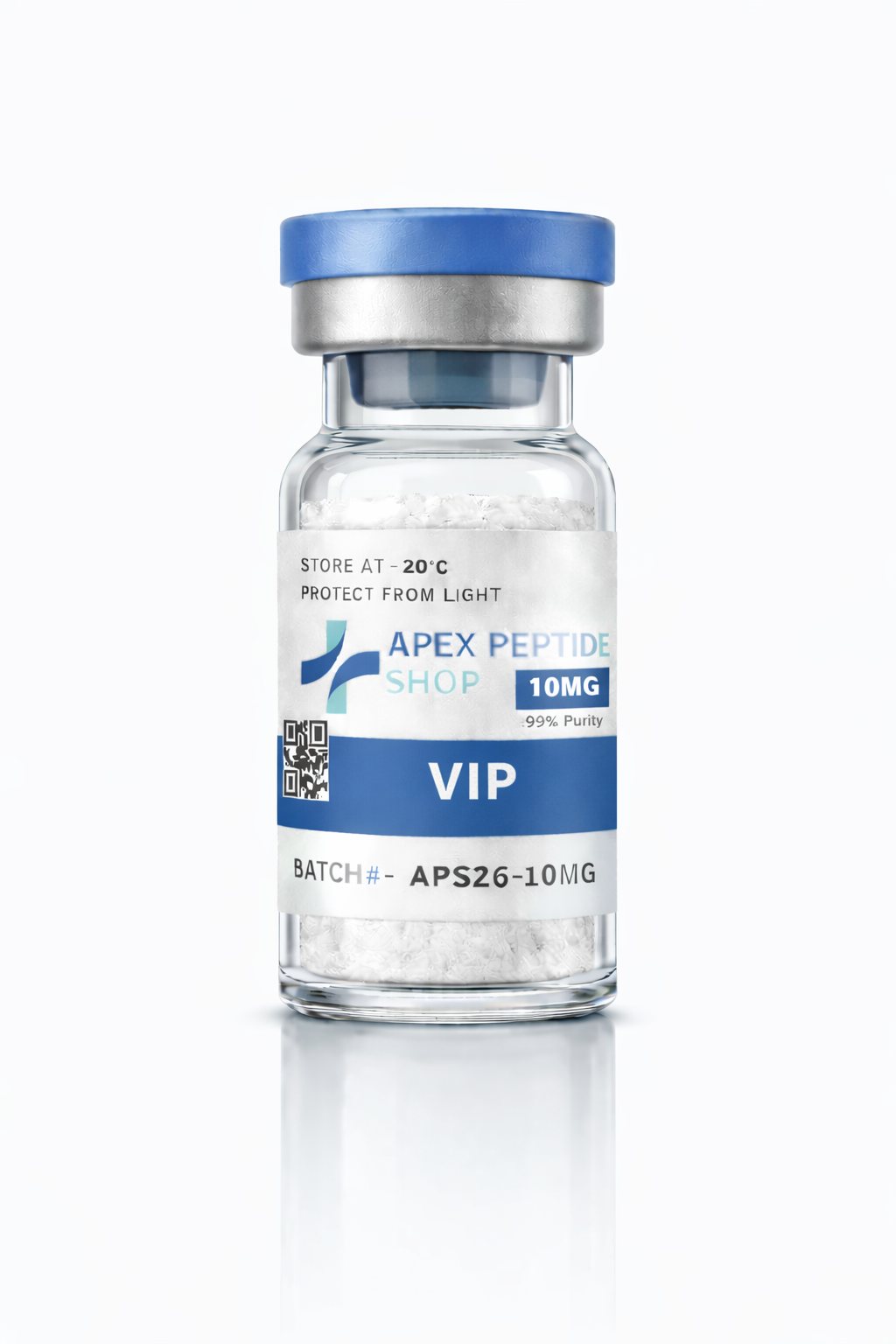
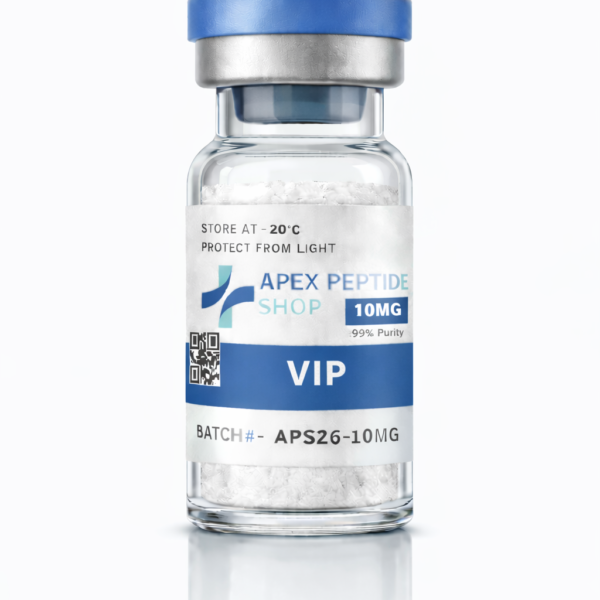
VIP Peptide – Vasoactive Intestinal Peptide for Research Applications
VIP (Vasoactive Intestinal Peptide) is a naturally occurring neuropeptide widely studied in cell signaling, neurobiology, immunology, and receptor pathway research. As a multifunctional peptide involved in intercellular communication, VIP has become an important compound in laboratory investigations focused on neurotransmission, smooth muscle signaling, and molecular regulatory mechanisms.
Due to its diverse biological signaling roles in experimental models, VIP is frequently referenced in scientific literature exploring peptide–receptor interactions and intracellular signaling pathways.
What Is VIP Peptide?
VIP is a 28–amino acid neuropeptide belonging to the glucagon/secretin peptide family. In research settings, it is studied for its interaction with specific receptors and its influence on cellular communication networks.
Laboratory research commonly investigates VIP in relation to:
-
Neuropeptide signaling pathways
-
Receptor activation mechanisms
-
Cellular communication systems
-
Molecular regulatory signaling
Its naturally occurring structure makes it valuable for experimental models examining peptide-driven signaling processes.
Key Research Areas & Scientific Interest
🔬 Neurobiology Research
Studied in experimental models evaluating neuropeptide signaling and neuronal communication pathways.
🧬 Receptor Interaction Studies
Used in laboratory assays analyzing peptide binding dynamics and receptor activation responses.
⚙️ Cell Signaling Investigations
Referenced in research examining intracellular messenger systems and pathway regulation.
🧪 Immunological Pathway Research
Included in controlled experiments analyzing signaling mechanisms involved in immune-related cellular responses.
Laboratory Applications
VIP peptide is commonly utilized in:
-
Molecular biology studies
-
Neurochemical signaling research
-
Peptide–receptor binding assays
-
Cellular pathway investigations
-
Biochemical signaling analysis
Experimental parameters vary depending on protocol design, model system, and laboratory objectives.
Product Highlights
-
High-purity VIP peptide
-
Research-grade quality
-
Carefully manufactured for laboratory consistency
-
Free from fillers or additives
-
Suitable for controlled in-vitro experimental use
Important Notice
This product is intended strictly for research and educational purposes only.
Not for human consumption, medical use, or diagnostic applications.
Vasoactive Intestinal Peptide (VIP) is an endogenous 28–amino-acid neuropeptide widely distributed throughout the gastrointestinal tract, pancreas, lungs, cardiovascular system, and central nervous system. In research settings, VIP is recognized for its broad regulatory functions, including smooth-muscle relaxation, modulation of inflammatory signaling pathways, vasodilation, bronchodilation, and neuroprotection.
At the molecular level, VIP exerts its biological activity primarily through VPAC1 and VPAC2 receptors, which are highly expressed in pulmonary tissue as well as in various immune and neuronal cell populations. Engagement of these receptors influences cyclic AMP pathways, cytokine expression, vascular tone, and neuronal survival, making VIP a molecule of interest across multiple experimental domains.
VIP has been widely investigated in preclinical and translational research for its potential roles in:
- Pulmonary biology, including models of bronchoconstriction, pulmonary hypertension, and inflammatory lung conditions
- Immune modulation, with observed effects on cytokine regulation and immune cell signaling
- Gastrointestinal and inflammatory bowel research, due to its impact on motility, mucosal immunity, and epithelial integrity
- Neurological studies, particularly involving neuroinflammation, neuroprotection, and central nervous system homeostasis